
Solar Panel FAQs
Quality Solar Technology for Your Home
We use trusted solar panels, battery storage and inverter technology selected for dependable residential performance.
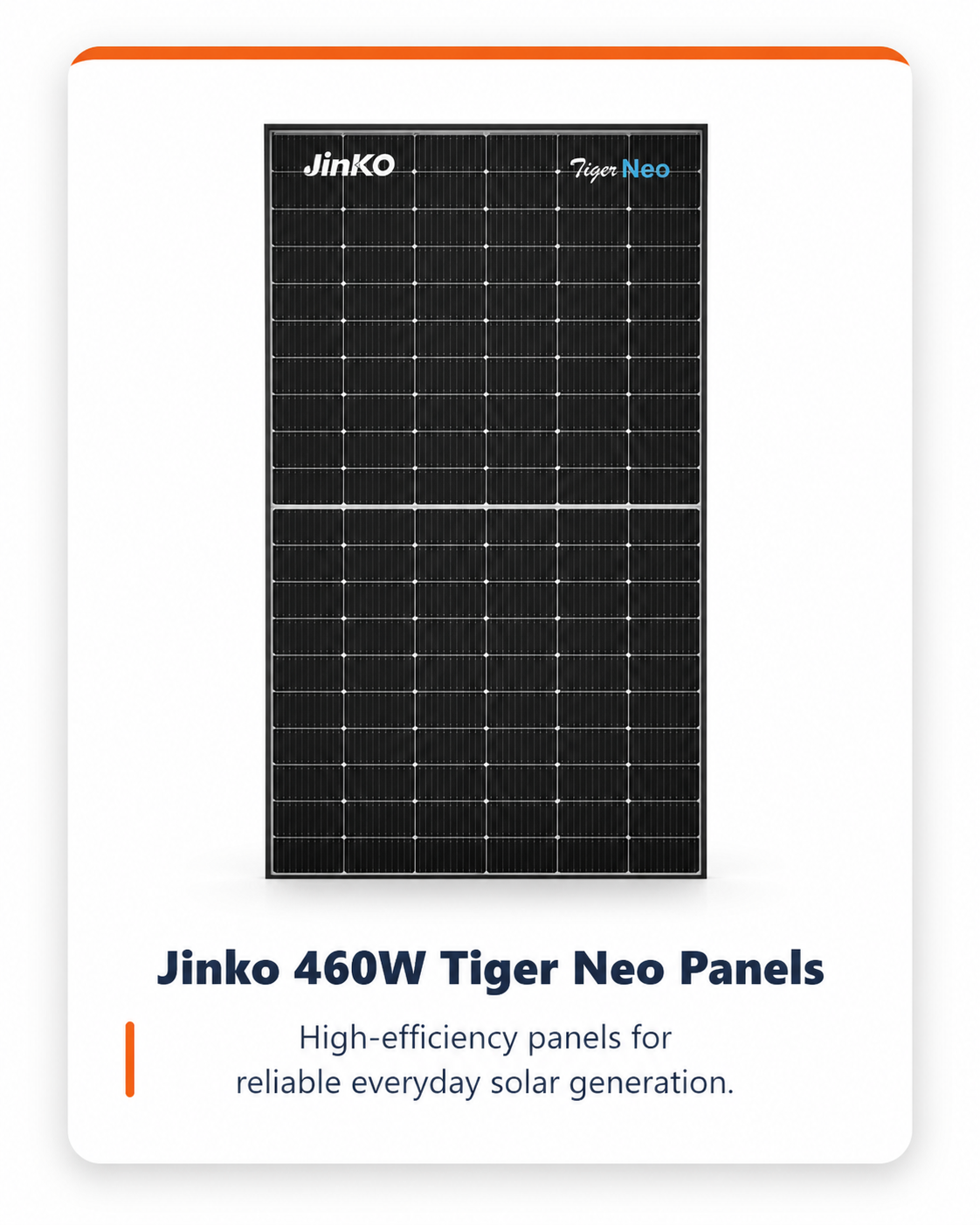
Jinko 460W Tiger Neo Panels
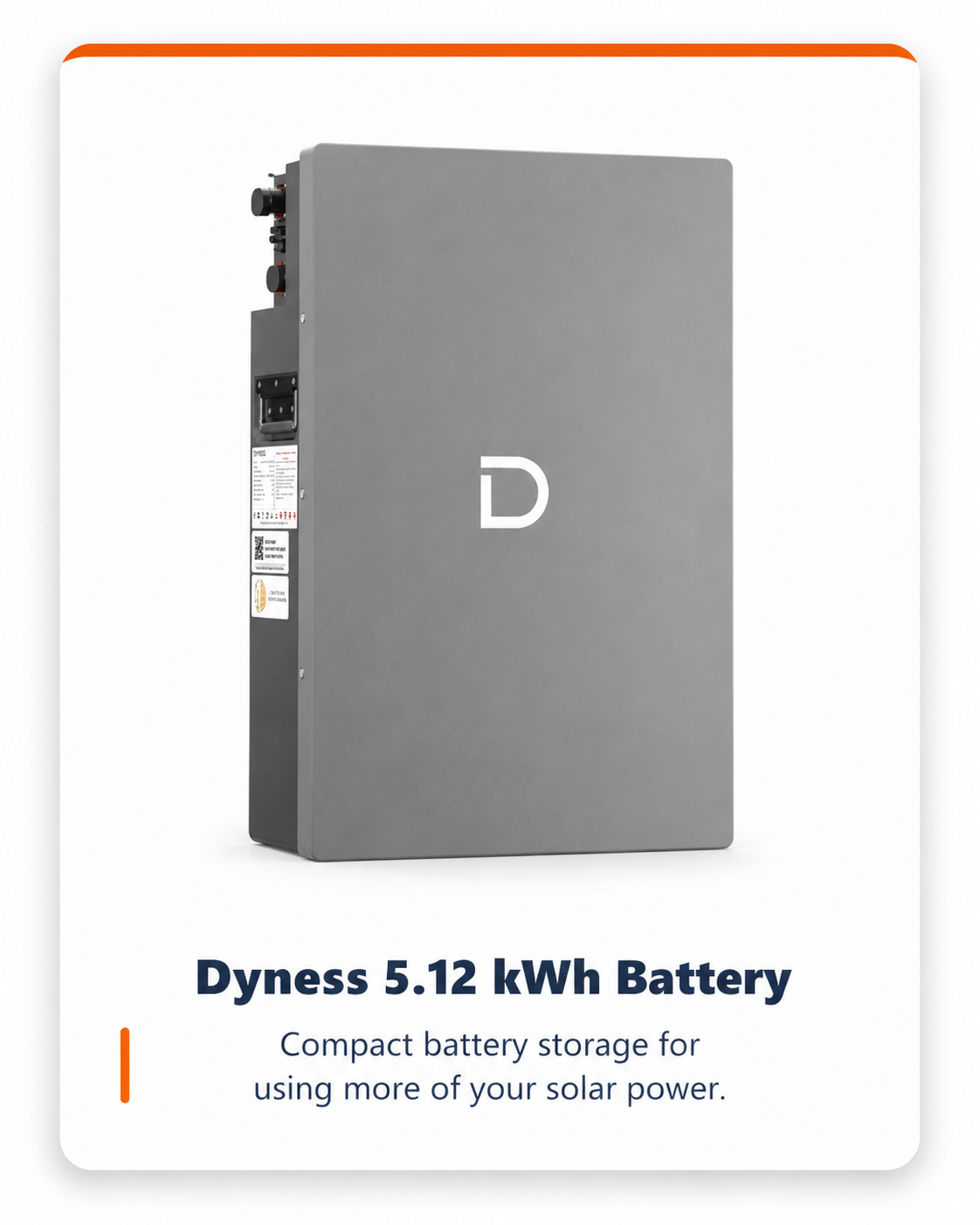
Dyness 5.12 kWh Battery
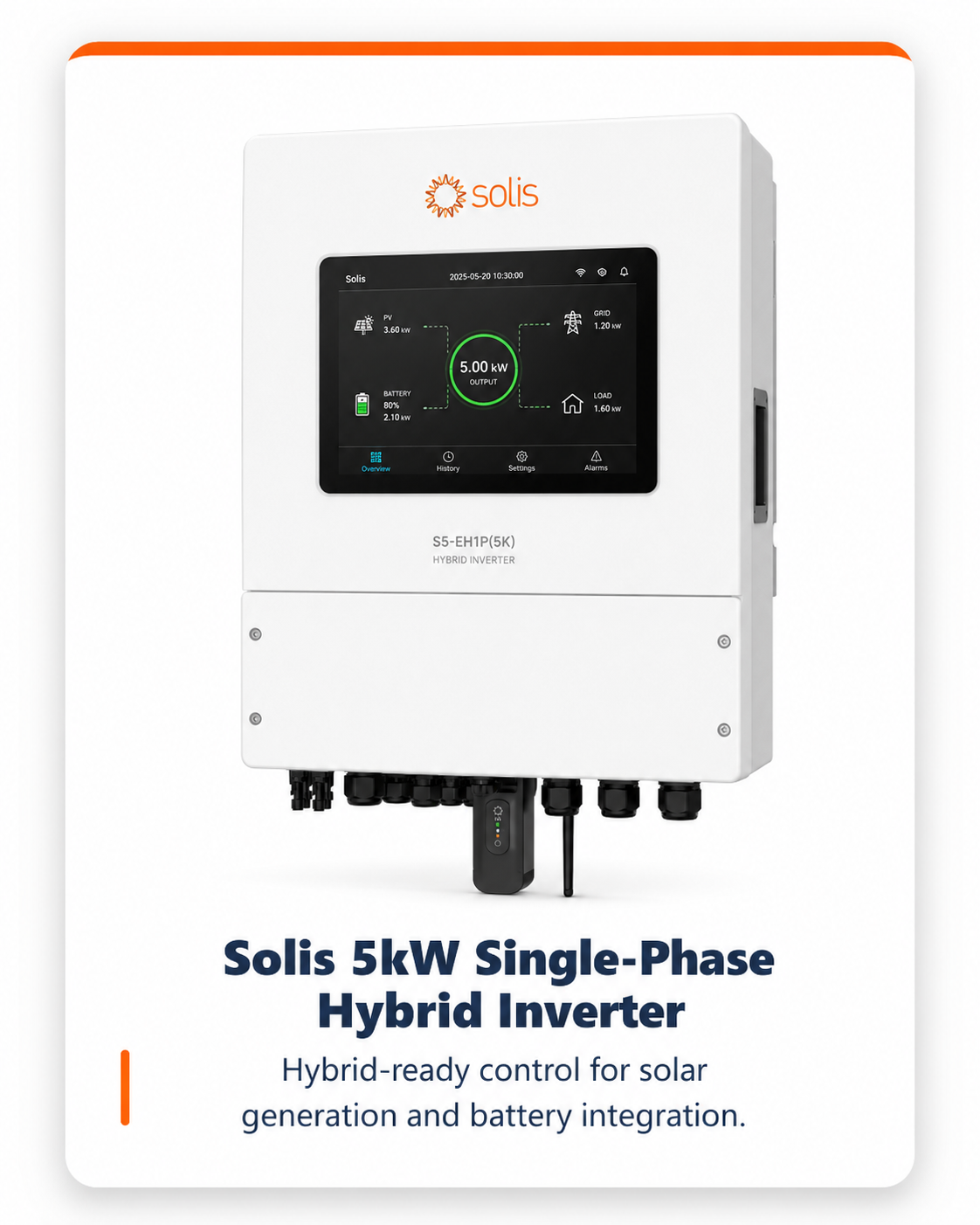
Solis 5kW Single-Phase Hybrid Inverter
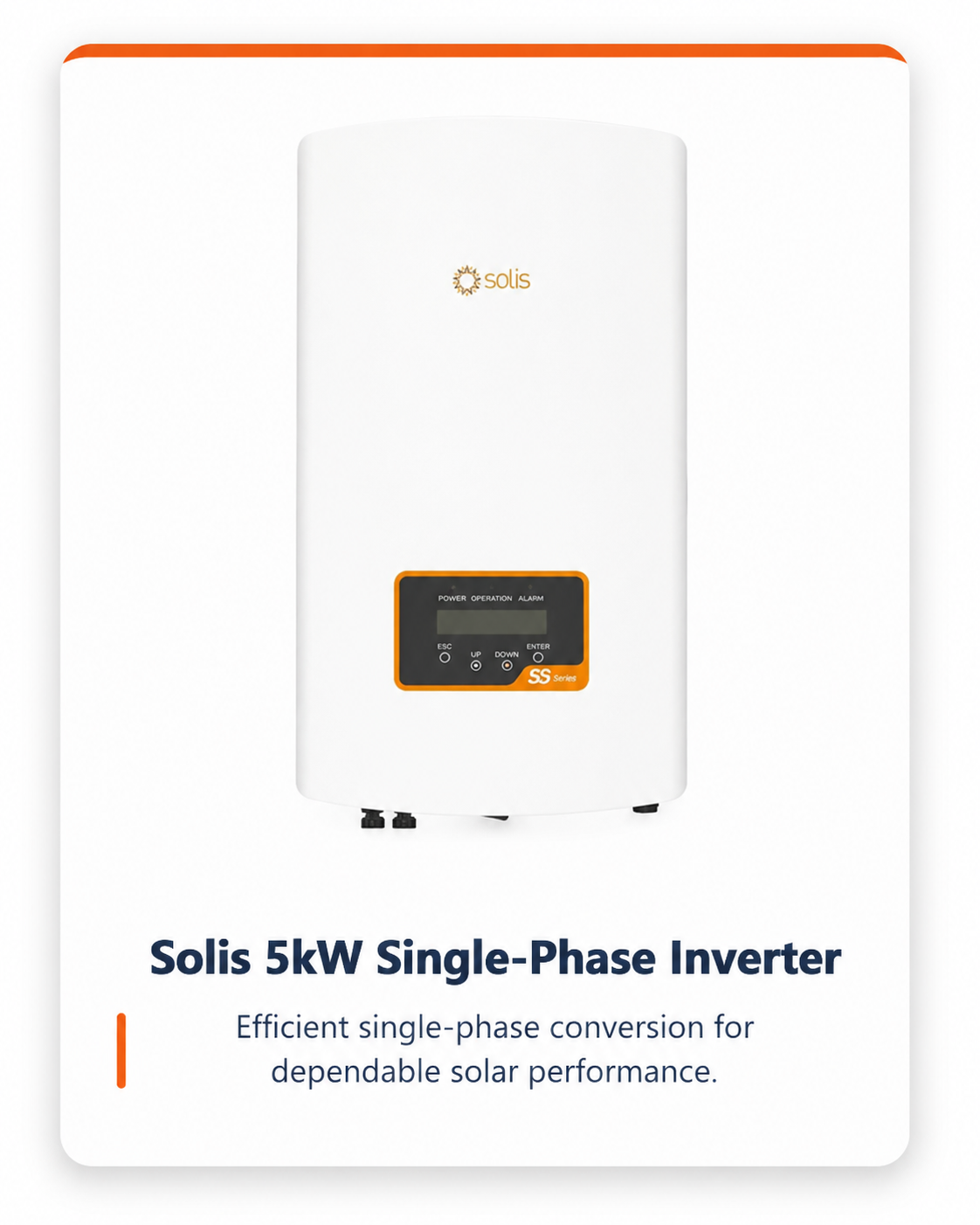
Solis 5kW Single-Phase Standard Inverter
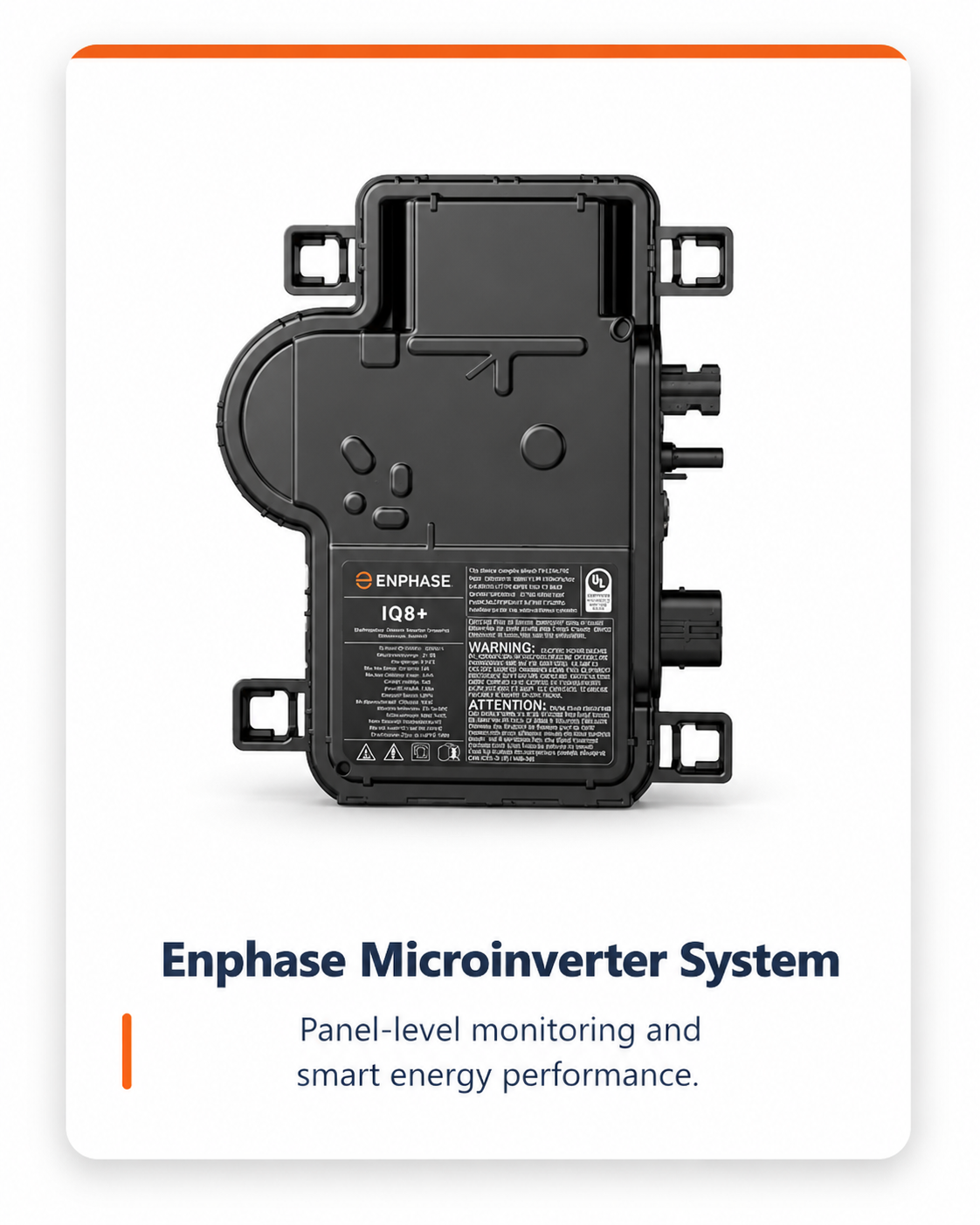
Enphase Microinverter System
Basic Solar Questions
Solar PV panels convert daylight into electricity for your home. During the day, the panels generate power that can be used by appliances such as your washing machine, dishwasher, lighting, sockets, heat pump or EV charger. If your system produces more electricity than your home is using at that moment, the extra electricity can be exported to the grid or stored in a battery if one is installed.
Yes. Solar panels work in Ireland because they use daylight, not just direct sunshine. They perform best on bright sunny days, but they still generate electricity on cloudy and overcast days. Output is usually higher in spring and summer and lower in winter because there are fewer daylight hours.
Yes. Solar panels still generate electricity on cloudy days, but the output is lower than on clear sunny days. Even when the weather is overcast, your system can still help reduce the amount of electricity you buy from the grid.
No. Solar panels need daylight to generate electricity, so they do not produce power at night. If you have a battery, you may be able to use stored solar electricity in the evening or at night, depending on how much energy was stored during the day.
Savings depend on your electricity usage, roof direction, system size, whether you use electricity during the day, and whether you add a battery or hot water diverter. Homes that use more electricity during daylight hours usually get better value from solar because they use more of the electricity they generate.
For many Irish homes, solar can be a strong investment because it can reduce electricity bills, protect against future energy price increases, and make the home more energy efficient. The exact return depends on your roof, electricity usage, package choice, grant eligibility and selected add-ons.
This depends on your roof space and electricity usage. A smaller home may need fewer panels, while a larger home, family home or EV household may benefit from a larger system. Abel.ie packages are designed to give customers a simple starting point, with the option to add extra panels if required.
If your solar panels produce more electricity than your home is using at that time, the extra electricity can be exported to the grid. If you have a battery, some of the excess energy can be stored for later use. Export payments may be available depending on your electricity supplier.
Solar PV panels generate electricity, not hot water directly. However, you can add a hot water diverter, which sends spare solar electricity to your immersion heater to help heat your water. This can be a useful add-on for homes with regular hot water demand.
Solar panels can cover a portion of your home’s electricity needs, but they may not power everything all the time. Your home will still remain connected to the grid, so you have electricity when your solar system is not producing enough, such as at night or during periods of high usage.
Package Questions
Abel.ie offers simple solar package options for Irish homeowners. These include a Smart Saver package for straightforward solar PV, a Battery Ready package for homes that may want storage now or later, and a Premium Solar package for customers who want advanced monitoring and a higher-performance setup.
Choose Smart Saver if you want a simple and affordable way to start with solar. Choose Battery Ready if you want the option to add battery storage now or in the future. Choose Premium Solar if you want advanced technology, panel-level monitoring and long-term system visibility.
The Smart Saver package is best for smaller homes, customers starting their solar journey, or households that use electricity during the day. It is designed to keep things simple while still giving you the benefits of solar PV.
The Battery Ready package is best for homes that may want to store unused solar electricity for later. It is suitable for households with evening electricity use, family homes, or customers who want the option to add battery storage.
The Premium Solar package is best for customers who want a more advanced solar system with strong monitoring, long-term visibility and premium technology. It can be useful for roofs with different orientations or homeowners who want detailed system performance information.
Yes. You can add extra panels if your roof has suitable space and your home would benefit from a larger system. Extra panels may increase the total system cost, but they can also increase generation and potential savings.
This depends on the package and system design. If future battery storage is important to you, the Battery Ready package is usually the better option because it is designed with future flexibility in mind.
Available add-ons may include battery storage, hot water diverter, EV charger, BER assessment, extended inverter warranty and extra panels. The available add-ons can depend on the package selected.
Grants and Pricing Questions
Yes. Homeowners in Ireland may be eligible for SEAI grant support for solar PV. The grant amount and eligibility rules can change, so customers should always check the latest grant information before proceeding.
The SEAI solar PV grant is currently available up to €1,800 for eligible homes. The exact amount depends on the system size and SEAI rules at the time of application.
Eligibility depends on SEAI rules. In general, the home must have an MPRN, must have been built and occupied before 2021, and must not have already received solar PV grant funding for the same MPRN.
Yes. You should have SEAI grant approval in place before works begin. If work starts before grant approval, the grant may not be payable.
Yes, a post-works BER assessment is usually required as part of the SEAI grant process. This helps confirm the completed upgrade and is part of the grant drawdown process.
The Abel.ie booking deposit is refundable within the stated cancellation window. Customers should review the cancellation terms before booking so they understand the timeframe and conditions.
The booking deposit helps secure your place in the process and allows Abel.ie to review your selected package, add-ons and details. The remaining balance and final quotation can then be confirmed after your information has been reviewed.
Yes. After you submit your package selection, add-ons and customer details, Abel.ie can provide a quotation based on the information supplied. The quotation will reflect your selected package, extras and any applicable discounts or grant information.
Booking and Installation Questions
The Abel.ie online booking process is simple. You choose your solar package, select any extras, submit your details, pay your booking deposit, receive your quotation, and then confirm the installation process.
You will need to provide your name, email address, contact number, full address and Eircode. You may also be able to upload roof or property photos and add notes about your home or requirements.
Photos can help the team better understand your roof, property layout, access points and any possible installation considerations. Clear photos can make the review process smoother and may reduce delays.
If Abel.ie offers a self-survey discount, customers can receive an additional discount by submitting useful roof, site or property information themselves. The discount should be confirmed during the booking or quotation process.
After you submit your details, Abel.ie reviews your selected package, add-ons, property information and any uploaded photos. The team can then prepare the next steps and confirm your quotation or booking details.
The installation time depends on the system size, property type and installation complexity. Many standard residential solar PV installations can be completed quickly, but the full process may also include grant approval, ESB Networks notification, BER assessment and scheduling.
In most cases, someone will need to provide access to the property, attic, electrical board or installation areas. The team will confirm what access is required before the installation date.
Advanced Solar Questions
An inverter converts the electricity produced by your solar panels into electricity your home can use. It is one of the key parts of a solar PV system.
A hybrid inverter is designed to work with solar panels and battery storage. It is useful for homeowners who want battery storage now or may want to add it in the future.
Microinverters are small inverters fitted at panel level. They allow each panel to work more independently and can provide detailed panel-level monitoring. This can be useful for some roof layouts or premium systems.
Panel-level monitoring allows you to see how individual panels are performing. This can make it easier to understand system performance and identify issues if one panel is underperforming.
A battery stores unused solar electricity so you can use it later, such as in the evening. This can help increase the amount of solar electricity you use in your home instead of exporting it to the grid.
Not every home needs a battery. A battery may be useful if you use a lot of electricity in the evening or want to store more of your solar energy. If you use most of your electricity during the day, you may get good value from solar panels without a battery.
A hot water diverter sends spare solar electricity to your immersion heater. This can help heat your water using excess solar electricity instead of exporting it to the grid.
Yes. Solar panels can help charge an electric car when your panels are generating electricity and your EV charger is in use. The amount of solar charging depends on your system size, driving habits, charger setup and the time of day you charge.
South-facing roofs often produce the highest annual output, but east- and west-facing roofs can also work well. East-facing panels produce more in the morning, while west-facing panels produce more later in the day. The best design depends on your home and energy usage.
Yes. Shading from chimneys, trees, nearby buildings or roof features can reduce output. The effect depends on the amount of shading, the time of day and the system design. A proper review helps identify the best panel layout.
Solar panels generally require very little maintenance. Rain helps keep panels clean, and most systems include monitoring so performance can be checked. It is still important to keep an eye on system performance and arrange checks if anything seems unusual.
Solar panels are designed to last for many years, often with long product and performance warranties. Output may slowly reduce over time, but a well-installed system can continue generating electricity for decades.
A properly installed solar PV system should not damage your roof. Installers use mounting systems designed for roof types such as slate, tile or other suitable materials. The roof condition should be checked before installation.
Many domestic rooftop solar PV installations in Ireland do not require planning permission, but rules can depend on the property, location and installation type. Customers should check if any special restrictions apply, especially for protected structures or unusual sites.
Most standard grid-connected solar PV systems automatically shut down during a power cut for safety reasons. If backup power is important to you, this needs to be discussed separately because it requires specific system design and equipment.
In some cases, yes. Expansion depends on roof space, inverter capacity, battery compatibility and electrical design. If future expansion is important, mention it during the package selection or quotation stage.
The best system depends on your electricity usage, roof space, budget, grant eligibility, daytime usage, EV plans, battery interest and long-term goals. Abel.ie helps simplify the decision by offering clear package options and add-ons.